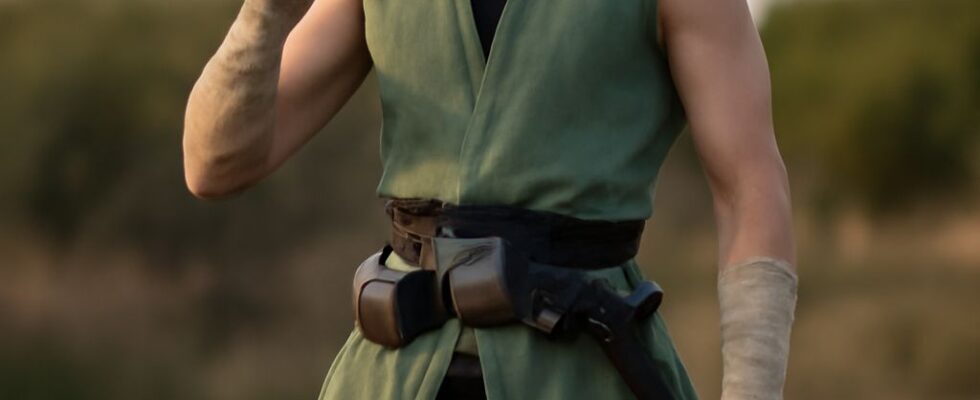
Build a wood elf trained as a monk and you can cross the battlefield quickly, protect an ally, and land a useful strike without wearing armor. This guide uses the 2014 Dungeons & Dragons rules throughout. Your elven martial artist will work best when you plan where to move after the attack, too.
Elven monk basics: Speed with a purpose
The 2014 elf rules give wood elves a 35-foot walking speed, a +2 Dexterity increase, and a +1 Wisdom increase. Those ability increases fit the monk: Dexterity improves attacks with monk weapons and unarmed strikes, while Dexterity and Wisdom both contribute to Unarmored Defense. When you wear no armor and carry no shield, your Armor Class (AC) is 10 plus both modifiers.
At level 2, Unarmored Movement adds 10 feet while you are unarmored and not wielding a shield. Your elf monk therefore has a 45-foot walking speed. That extra reach helps you get to a threatened ally or escape a bad position, but leaving an enemy’s reach can still provoke an opportunity attack.
Wood elves also have proficiency in Perception, darkvision out to 60 feet, and Mask of the Wild, which allows hiding when lightly obscured by natural phenomena such as foliage or rain. Your elf’s monastic training adds two class skills; Acrobatics and Insight make a useful pair beside Perception. You also gain proficiency with simple weapons and shortswords, plus one artisan’s tool or musical instrument. Elf weapon training grants longbow proficiency, though a longbow is not a monk weapon.
A level-three character you can play
Meet Leth, a wood elf who follows the monk’s Way of the Open Hand and helps the party scout without racing ahead alone. Using the standard ability array before racial increases, assign 15 to Dexterity, 14 to Wisdom, 13 to Constitution, 12 to Intelligence, 10 to Strength, and 8 to Charisma. The racial increases make Dexterity 17 and Wisdom 15. Leth has AC 15 unarmored, 45-foot speed, and a ki save DC of 12: 8 plus a proficiency bonus of 2 and a Wisdom modifier of 2.
Choose a shortsword from the starting equipment. At level 3 this elf in the monk class has three ki points, a resource used for special techniques. The 2014 monk rules restore spent ki after a short or long rest that includes at least 30 minutes of meditation. Keep a few counters near your sheet; three points vanish surprisingly quickly.
The Way of the Open Hand gives an elven practitioner of the monk class control options. When a Flurry of Blows strike hits, choose one effect: the target makes a Dexterity save or falls prone; makes a Strength save or is pushed up to 15 feet; or cannot take reactions until the end of your next turn. A prone target can help nearby melee allies, while a push can clear a path. Coordinate first: prone can make attacks from farther away harder.
Take a turn and help the team
Suppose an enemy is threatening the wizard beside your elf trained in monk techniques. You can move into reach and take the Attack action with your shortsword. Immediately afterward, spend one ki point for Flurry of Blows and make two unarmed strikes as your bonus action. If either hits, your Open Hand Technique can prevent that enemy from taking reactions. You can then move away from that enemy without provoking its opportunity attack; watch for other enemies along the route.
Alternatively, the elven monk can use the ordinary Martial Arts bonus strike after attacking with a monk weapon, saving ki for later. If survival matters more than another hit, Patient Defense spends one ki point to Dodge as a bonus action. Step of the Wind costs one ki point for a bonus-action Disengage or Dash and doubles jump distance for the turn. You get only one bonus action, so pick the option that fits the situation.
An elf monk is mobile, not invulnerable. Stay close enough to the group to receive help, and use Deflect Missiles as your reaction when a ranged weapon attack hits. Before your next session, put Leth’s AC, speed, ki total, and three bonus-action choices on your character sheet, then tell your wizard how you plan to protect them.