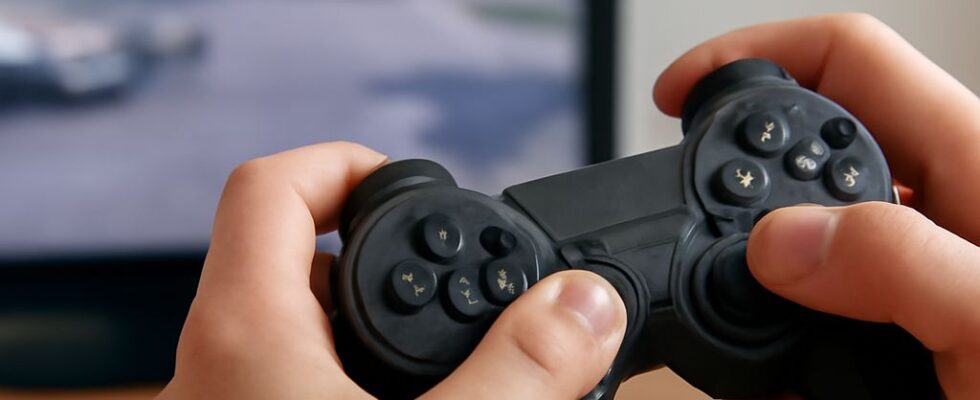
Better aim in a game is easy to see: you spot a moving target and place your cursor on it more accurately. Whether video games improve hand-eye coordination beyond the game is a harder question. Some studies find gains on separate visual-motor tasks, but the results do not establish a general upgrade to every real-world skill.
Hand-eye coordination in video games involves using visual information to guide a movement, such as adjusting a joystick when a target changes direction. Researchers can measure that process, but a better score on one test is not automatically better performance in every activity.
Video games hand eye coordination: What gets measured?
In video games hand eye coordination is often exercised through repeated decisions and corrections. The screen shows an error; your hand adjusts the controller. You practice that loop, but the game also asks for attention, anticipation, and familiarity with its controls. A score alone cannot tell you which ability changed.
Do video games improve hand eye coordination on tasks outside the game? To answer, researchers need a separate test and a comparison group. They also need to distinguish improvement caused by training from a preexisting difference between people who already play and those who do not.
What a training study found
In a 2016 study by Li, Chen, and Chen, researchers compared action gamers with non-action gamers and also trained non-action gamers on action or nonaction games. After five or ten hours of a driving or first-person shooter game, the action-game trainees improved on a separate visuomotor control task. The nonaction-game comparison group did not show the same improvement.
The task required participants to use visual feedback to control movement and correct errors. That matters because the test was not simply the game they had practiced. The result supports transfer to a related laboratory task: a skill learned in one setting showed up in another. It does not establish that participants became safer drivers on public roads. A controlled steering-like test and traffic are different challenges.
The study also found an advantage among existing action gamers, but that comparison alone cannot prove games caused it. People with stronger initial skills might be more likely to play those games. The training comparison gives a stronger reason to consider a causal effect, while still limiting the claim to the games and measures studied.
A different test gives a narrower result
Gozli, Bavelier, and Pratt’s 2014 study compared action gamers and non-gamers on a manual tracking task. Participants followed a moving target, and researchers assessed accuracy and improvement over repeated trials. When the movement pattern stayed consistent, gamers learned faster and eventually performed better. When the pattern changed each trial, the groups did not differ.
This was a comparison of existing players, not an experiment assigning people to game training. It therefore cannot establish that gaming produced the difference. It also suggests a useful distinction: learning a predictable pattern is not the same as instantly controlling any new movement better.
The question “do video games improve hand eye coordination?” deserves that distinction. A game may improve coordination with its own controls, help learning on a related task, or show no measurable advantage on another task. Those are different outcomes, even if a headline packs them into one sentence.
What to do with the evidence
If your goal is improving hand-eye coordination through games, choose a game that asks you to track moving objects and make precise corrections, then monitor a specific measure such as accuracy at a fixed difficulty. That can show progress in the game. To see whether it carries over, compare performance on a separate task before and after practice, under similar conditions. A personal test cannot rule out every other explanation, but it gives you something more useful than a feeling that your reflexes have leveled up.
The research on gaming and hand-eye coordination supports some transfer to related tasks, not a promise that a controller will improve every physical skill. For a practical goal, such as catching a ball or playing an instrument, practice that activity too. Its timing, movements, and feedback may differ substantially from those on a screen.
When a claim says video gaming improves hand-eye coordination, check what was measured and whether the gain appeared on an unpracticed task before applying it to your own goal.