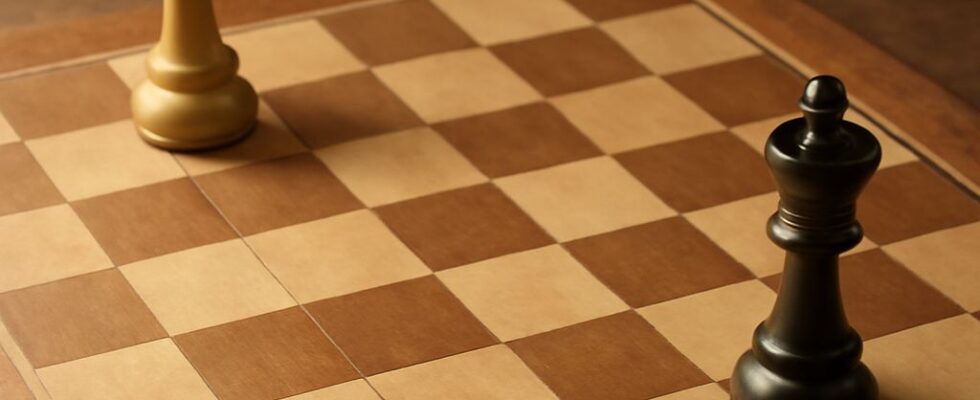
Chess is a game of strategy and skill, revolving around the movement and positioning of chess board pieces. Each piece has unique movements and positions, making it essential to understand their intricacies to master the game. This guide will explore the different chess board pieces, their positions on the board, their movements, and basic chess moves to enhance your gameplay.
Introduction to Chess Board Pieces
A standard chess set comprises six distinct types of chess board pieces: the king, queen, rook, bishop, knight, and pawn. Each has its own role and moves:
- King: The king can move one square in any direction. It is essential to protect the king, as its capture results in losing the game.
- Queen: The queen is the most powerful piece, moving any number of squares vertically, horizontally, or diagonally.
- Rook: The rook moves any number of squares along a row or column.
- Bishop: The bishop moves diagonally for any number of squares, remaining on the same color.
- Knight: The knight moves in an L-shape: two squares in one direction and then one square perpendicular. It can jump over other pieces.
- Pawn: The pawn moves forward one square, but captures diagonally. On its first move, it can advance two squares.
Understanding Chess Positions
The initial chess positions are crucial for setting the tone of the game. Each player starts with 16 pieces positioned on the two rows closest to them:
- Pawns: Positioned on the second row from each player’s perspective, they form the front line of defense.
- Rooks: Located at the corners of the board, providing strong horizontal and vertical movement.
- Knights: Placed next to the rooks, ready to leap over other pieces.
- Bishops: Positioned next to the knights, ready to control diagonals.
- Queen: Positioned on the square matching its color (white queen on white square, black queen on black square).
- King: Positioned next to the queen, requiring protection throughout the game.
Exploring Chess Movements
Chess movements are defined by the capabilities of each piece. Understanding these movements is vital for strategic play:
- Pawn Movement: Pawns move forward but capture diagonally. Their movement is limited compared to other pieces but can promote when reaching the opposite end of the board.
- Rook and Bishop Movement: Rooks provide control over ranks and files, while bishops control diagonal lines. These movements are useful for positioning and control.
- Knight Movement: Knights can jump over pieces, making them unpredictable and useful for surprise attacks.
- Queen Movement: The queen combines the power of rooks and bishops, allowing it to dominate the board.
- King Movement: Although limited, the king’s movement must be carefully managed to avoid checkmate.
Mastering Basic Chess Moves
Understanding basic chess moves is essential for players looking to improve their skills:
- Opening Moves: The first few moves are crucial for establishing control and positioning pieces effectively. Common openings include the King’s Pawn Opening and the Queen’s Gambit.
- Castling: A defensive move involving the king and rook, castling helps protect the king while connecting rooks.
- En Passant: A special pawn capture that occurs when a pawn moves two squares forward from its initial position and lands beside an opponent’s pawn.
- Promotion: When a pawn reaches the opposite side of the board, it can be promoted to any other piece, typically a queen.
- Check and Checkmate: These moves involve attacking the opposing king. Check forces the opponent to respond, while checkmate ends the game.
By mastering the chess board pieces, understanding chess positions, exploring chess movements, and executing basic chess moves, players can develop their strategic skills and increase their chances of success in the captivating game of chess.