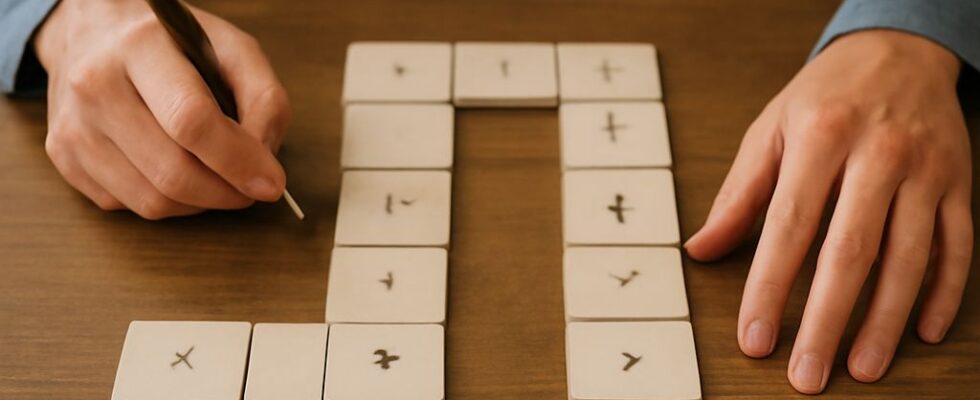
Math puzzle printables offer an engaging and accessible way for learners of all ages to develop their problem-solving skills, boost logical reasoning, and have fun with numbers. These downloadable sheets cover a wide variety of puzzle types, from classic sudoku and crosswords to more creative logic challenges, making them ideal for both classroom and home use. Whether you’re seeking to reinforce key math concepts or simply looking for brain-boosting entertainment, the right math puzzle printable can be an excellent addition to your learning routine.
What Are Math Puzzle Printables?
A math puzzle printable is a ready-to-use worksheet featuring mathematical challenges designed to be printed and solved on paper. Unlike digital-only games, printables give students the tactile satisfaction of solving puzzles by hand. They can range from simple addition and subtraction problems for younger children to advanced brainteasers involving algebra, geometry, or logical deduction for older students and adults.
Most math puzzle printables are formatted as PDFs or image files for easy downloading and printing at home, in classrooms, or during tutoring sessions. They often include a mixture of visual elements—such as grids, number sequences, or diagrams—to make the solving experience interactive. Some are single-page challenges, while others are multi-page booklets for extended engagement. Free and premium math puzzle printables are widely available online, catering to different age groups and ability levels, so there’s something for everyone seeking math-related fun.
Commonly, math puzzle printable sets include answer keys for quick self-checking, making them ideal for independent study or group competitions. Teachers and parents frequently use them as educational supplements, rainy day activities, or rewards for motivated learners. The versatility and accessibility of math puzzle printables have made them a staple in both formal and informal education settings.
Printable math puzzles are not only a classroom resource but also a creative tool for family game night, travel kits, or brain-training routines for adults. Their portability and variety mean they can be employed anywhere, from kitchen tables to waiting rooms, engaging learners beyond the screen.
Benefits of Solving Math Puzzles
Regularly working through a math puzzle can deliver a range of mental and educational benefits. First and foremost, math puzzles naturally strengthen critical thinking and problem-solving skills. By requiring solvers to analyze clues, test hypotheses, and persist through challenges, these printables help build cognitive resilience and logical reasoning that translate well to both academic and real-world settings.
Math puzzle printables are also excellent for reinforcing key concepts in an enjoyable, low-pressure format. For example, children mastering multiplication facts can use puzzle grids and matching games to practice without the monotony of rote drills. Puzzles involving patterns, sequences, or spatial reasoning offer practical exposure to skills used in science, technology, engineering, and math (STEM) fields.
Beyond the academic advantages, puzzles are known to boost confidence and motivation. Successfully solving a challenging puzzle delivers a sense of accomplishment, encouraging learners to tackle harder problems. When used in groups, math puzzles foster collaboration, friendly competition, and communication—skills valuable for teamwork in school and beyond.
For adults, engaging with math puzzle printables supports lifelong learning and brain health. Activities like sudoku, kakuro, and logic puzzles have been shown to improve memory, delay cognitive decline, and provide a healthy mental workout. They also serve as relaxing distractions from daily stress, blending recreation with personal development.
Types of Math Puzzles You Can Print
There is a rich variety of math puzzle printables available to suit different interests, age groups, and learning objectives. Here are some of the most popular types:
- Sudoku: Number-placement puzzles that test logical reasoning and pattern recognition. Basic versions are perfect for beginners, while larger grids and special variants add complexity for experts.
- Math Crosswords: Like traditional crosswords, but with clues that require arithmetic or logic to solve. These are great for vocabulary and math skill integration.
- Logic Puzzles: Problems that require step-by-step deduction, such as grid-based puzzles (“Who owns the red car?”) or riddles with numerical clues.
- Math Mazes: Navigational puzzles where the correct path is determined by solving equations or following number sequences.
- Magic Squares and Number Patterns: Challenges that involve arranging numbers to achieve specific sums or sequences, reinforcing addition, subtraction, or multiplication concepts.
- Cryptarithms: Puzzles where letters represent digits in an arithmetic problem, encouraging creative thinking and code-breaking skills.
- Missing Number Grids: Worksheets where students fill in blanks in arithmetic tables or patterns, ideal for practicing operations and algebraic thinking.
Many websites, educational publishers, and independent creators offer these puzzles in printable form, often grouped by grade or difficulty level. Some even provide themed puzzle packs for holidays, seasons, or specific math skills, making it easy to keep activities fresh and engaging throughout the year.
For those seeking variety, you’ll also find printable math puzzle books that combine several types and offer hours of brain-boosting fun. These compilations are perfect for summer learning, travel, or as unique gifts for puzzle lovers.
How to Use and Create Your Own Math Puzzle Printables
To get the most from math puzzle printables, start by selecting puzzles that match the solver’s age, interests, and skill level. For children, pick printables that reinforce current classroom topics or introduce new concepts in a playful way. For adults, seek out puzzles that provide a suitable challenge—enough to be engaging, but not discouraging. Many printables offer tiered difficulties, so you can progress over time.
Use printed puzzles as warm-ups in the classroom, for homework alternatives, or as brain breaks during long assignments. At home, integrate them into family routines, keeping a stash in the car or at the breakfast table. For group settings, print multiple copies and host friendly competitions or timed challenges to boost motivation and collaboration.
If you’d like to create your own math puzzle printables, start simple—a blank grid, a list of math facts, or a story problem can be easily designed in word processing or spreadsheet software. Look for free templates online, or use specialized apps and tools that automatically generate sudoku, crosswords, or logic puzzles based on your input. Ensure each puzzle is clear, visually accessible, and includes an answer key for easy checking.
Don’t forget to personalize puzzles to your learners’ interests and needs. Incorporate favorite themes, holidays, or real-life scenarios to make the math more meaningful. With the right approach, math puzzle printables can become a beloved part of your educational toolkit—fueling curiosity, confidence, and lifelong learning.