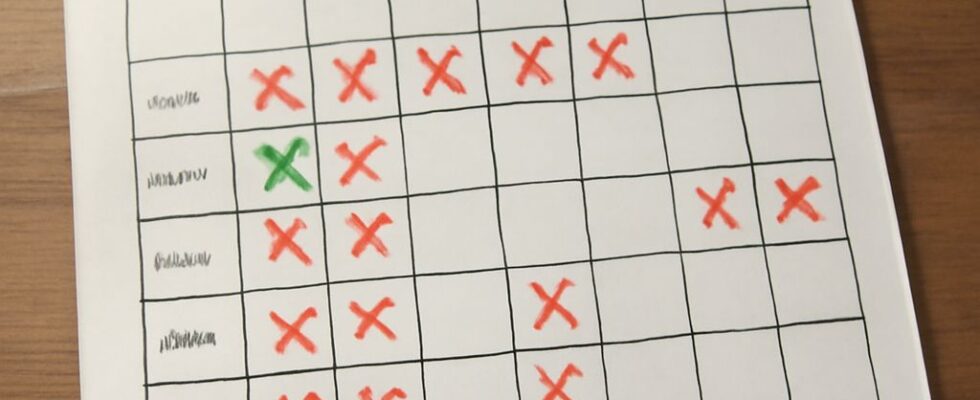
Logic grid puzzles have long fascinated enthusiasts with their blend of mystery and deduction. These puzzles, a subset of logic problems, require solvers to use clues provided in a narrative to fill out a grid, revealing relationships or characteristics that are not immediately obvious. Whether you’re a seasoned solver or a curious newcomer, this guide will equip you with strategies to tackle grid puzzles efficiently and confidently.
Understanding Logic Grid Puzzles
Logic grid puzzles are structured around a grid that helps organize information based on a series of clues. Typically, these puzzles involve several categories, each with multiple options. The goal is to fill out the grid accurately to match items from one category with items from another, using logical deduction to reach conclusions. A classic example might involve matching names, favorite fruits, and pets based on a collection of clues. Understanding how the grid operates is crucial to solving these puzzles successfully.
Essential Techniques for Solving Logic Problems
Mastering logic problems requires a strategic approach. Here are some key techniques:
- Read the clues carefully: Start by reading all the clues and understanding the relationships they indicate. Highlight or note critical information.
- Use elimination: Cross out possibilities that are explicitly negated by the clues. This helps narrow down the options.
- Look for definitive answers: Some clues provide direct correlations that can quickly fill in parts of the grid.
- Think ahead: Always consider the implications of each placement on the entire grid, ensuring that subsequent entries remain consistent with the information gathered.
Step-by-Step Guide to Solving a Logic Grid
To effectively solve a logic grid puzzle, follow these steps:
- Setup the grid: Begin by drawing a grid with rows and columns representing the different categories.
- Fill in known values: Based on initial clues, fill in any sure matches to set the foundation for further deductions.
- Apply elimination technique: Use clues to eliminate impossible options and mark these on the grid.
- Cross-reference clues: Check how different clues interact with each other. This can often lead to additional eliminations and confirmations.
- Iterate and deduce: Continue to iterate through clues and use deductive reasoning to determine unknowns. Adjust the grid as new information becomes apparent.
- Verify your solution: Once the grid is filled, check each clue against your solution to ensure consistency and correctness.
Common Mistakes and How to Avoid Them
Even seasoned solvers can fall prey to common pitfalls. Here’s how to avoid them:
- Misinterpretation of clues: Double-check your understanding of each clue. Ambiguous clues can often be misleading.
- Overlooking dependencies: Ensure all connections and dependencies between categories are considered. This oversight can lead to incorrect conclusions.
- Rushing the process: Take your time with deductions. Rushed decisions often lead to errors that can disrupt the entire puzzle-solving process.
- Neglecting to verify: Always cross-check your filled grid with the provided clues for accuracy. Verification is key to ensuring a successful solve.
By applying these strategies and understanding the intricacies of logic grid puzzles, you’ll gain the skills needed to unravel even the most challenging grid puzzles. Happy solving!