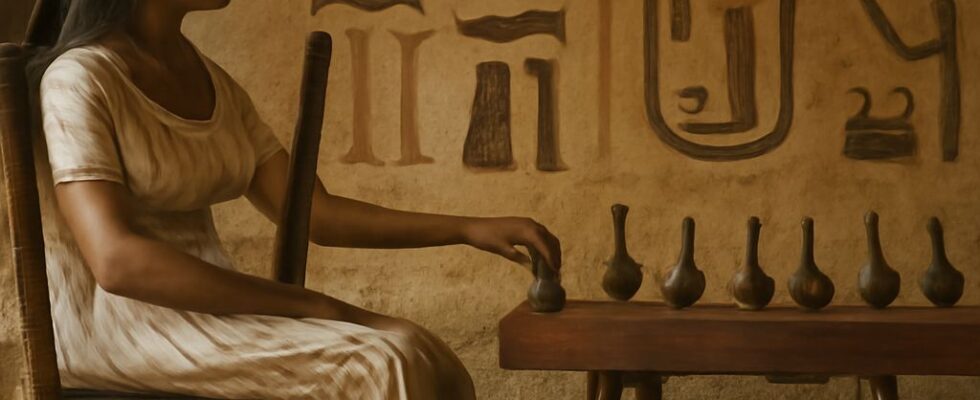
Senet is one of the world’s oldest known board games, originating in ancient Egypt over 5,000 years ago. Once played by pharaohs and commoners alike, senet is both a race game and a journey of the soul, featuring a distinctive board and unique movement rules. This guide outlines everything you need to know: what senet is, the exact equipment and board layout you’ll need, how to play senet step-by-step, and essential strategies for winning the game.
What Is Senet?
Senet is an ancient Egyptian board game representing the journey of the soul through the afterlife, and it’s widely considered the first known board game in history. Archaeological finds of senet boards date back to the First Dynasty (c. 3100 BCE), with painted boards and references found in royal tombs such as Tutankhamun’s. The game’s name, “senet,” means “passing,” fitting its theme of moving pieces off the board and into the afterlife.
The senet board consists of 30 squares arranged in a grid of three rows and ten columns. Two players race to move their set of pawns from one end of the board to the other, navigating obstacles represented by special marked squares. Although some details have been lost to time, modern reconstructions of senet rules are based on ancient descriptions and artwork, making it playable today.
Senet is more than a pastime; in ancient Egypt, it carried symbolic meaning, representing fate and the struggle of the soul. The game was depicted in tomb wall paintings and even included as a burial good, indicating its importance in Egyptian society and the afterlife.
Senet Game Equipment and Board Setup
To play senet, you need a few essential items, all of which can be handmade or purchased as modern reproductions. The senet board is a rectangular grid of 30 squares (3 rows by 10 columns). Squares are numbered from 1 to 30, starting at the top left and moving left to right in rows.
Each player takes five pawns, often represented by tall and short pegs or cones of contrasting colors. Some sets feature seven pawns per player, but the most common reconstruction uses five. In addition to the pieces, players use four casting sticks or knucklebones instead of dice. The sticks have a flat and a rounded side, and the number of flat sides facing up determines the moves (usually from 1 to 5 spaces).
Five squares on the board—typically squares 15, 26, 27, 28, and 29—are marked with special symbols or artwork. These squares have unique effects that alter play, such as causing setbacks or offering safe zones. The final square (30) is the exit point where pieces leave the board.
To set up, each player places their five pawns alternately on squares 1 to 10, starting with the first player in the first square. The board is positioned so both players can reach the squares, with the special squares clearly marked for reference during the game.
Rules of Play: How Senet Works
Players take turns casting the sticks to determine how many squares they may move a pawn. The number of flat sides up translates as follows:
- 1 flat up: Move 1 space and take another turn
- 2 flats up: Move 2 spaces
- 3 flats up: Move 3 spaces
- 4 flats up: Move 4 spaces and take another turn
- No flats (all rounded): Move 5 spaces and take another turn
On a turn, the player chooses a pawn to move forward the appropriate number of squares. If a pawn lands on a square occupied by an opponent, the two pieces swap places. However, if a pawn is blocked by two or more of the opponent’s pawns in a row, it cannot leap over them and must select another move.
Landing on a special square can trigger different effects. The “House of Rebirth” (square 15) is a safe zone; the “House of Happiness” (26) and “House of Water” (27) often force the player to return to earlier squares, modeled after ancient artwork. The “House of Three Truths” (28) and “House of Re-Atoum” (29) are required stops before exiting the board. A pawn can only leave the board by landing exactly on square 30 with the correct roll.
If a player cannot make a legal move, their turn is forfeited. The game’s structure encourages blocking, tactical swaps, and strategic use of the marked squares to hinder the opponent’s progress.
Winning Senet: Strategy and Endgame
The objective of senet is to be the first to move all your pawns off the board. This is achieved by moving them in the prescribed S-shaped path (left to right on the first row, right to left on the second, left to right on the third), and then out of the board via square 30. Pawns must land exactly on the final square with the correct roll. If the roll is too high, the turn passes with no movement for that pawn.
Strategic play in senet revolves around controlling the board, especially the central squares and the special marked squares. Grouping your pawns can create blockades, making it harder for your opponent to pass or swap. Positioning two or more of your pawns in a row adds a layer of protection, as opponents cannot leap over a defended line. Use swaps judiciously to disrupt your rival’s progress, and avoid leaving single pawns vulnerable to being sent backward by landing on penalty squares.
Endgame finesse is crucial. With your pieces near the end, calculate the casting stick probabilities to maximize your chance of rolling the exact number needed to exit. Avoid crowding your last pawns in penalty zones, as this can delay their exit and open opportunities for your opponent to catch up. Experienced players plan several moves ahead, anticipating both their own and their opponent’s possible rolls and moves.
Senet blends luck and skill, rewarding careful planning and tactical flexibility. While the roll of the sticks introduces chance, strong players use positioning and timing to increase their odds, making every game a blend of strategy, anticipation, and adaptation.