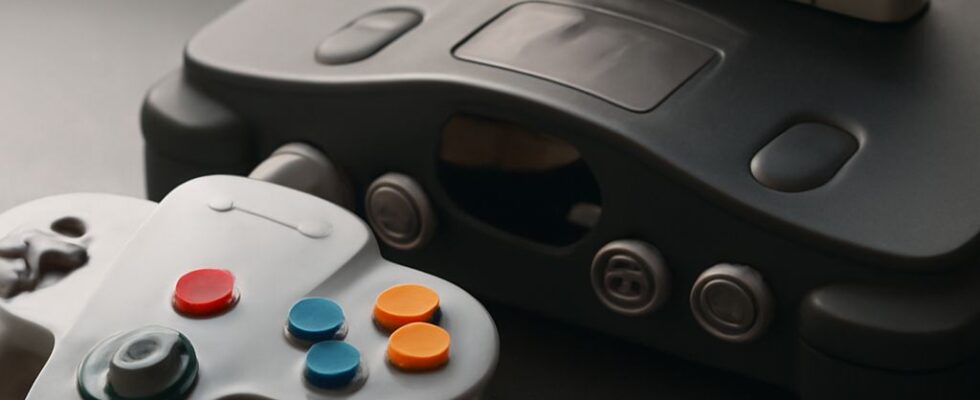
The Nintendo 64 library contains 388 unique, officially licensed games worldwide under the most commonly used count. North America received 296 of those titles. The answer to how many N64 games are there changes when a list counts one region, separate regional versions, N64DD software, or unreleased and unofficial projects.
For a practical overview, the 388-game figure is the standard worldwide cartridge-library total, while 296 is the North American retail total. The games that made the system memorable include landmark 3D adventures, technically ambitious shooters, and multiplayer releases built around four controller ports.
How many N64 games are there? The 388-game worldwide count
The commonly cited worldwide total is 388 games. This counts unique, officially licensed commercial games released on Nintendo 64 cartridges in at least one of the main regional markets, including Japan, North America, and Europe. A game released in all three regions still counts once, rather than three times.
This standard count covers games that reached consumers as normal releases. It excludes canceled games, prototypes, demonstrations, homebrew, and unofficial cartridges. Nintendo 64DD software is also generally tracked separately because it was released for the disk-based add-on rather than the standard cartridge console.
The 296-game North American total uses a narrower rule: it counts unique licensed games released commercially in the United States and Canada. It does not include titles that remained exclusive to Japan or Europe, and it does not multiply the total when a game received a different regional title, translation, or censorship change.
That is why 388 is not the result of adding every regional list together. It is a deduplicated worldwide catalog, while 296 describes one market’s releases.
Why regional library totals differ: unique games versus regional releases
Nintendo and third-party publishers did not release the same selection of games everywhere. Japan received several titles that never received a North American localization, including Sin and Punishment and Custom Robo. Europe also had a different release schedule and, in some cases, games that arrived later or used different names.
Regional databases can therefore answer different questions:
- Worldwide unique-title count: one entry for each officially released game, with regional versions combined.
- North American count: games commercially released in the United States and Canada, using the 296-title scope.
- Regional release count: a catalog for one market, which may omit exclusives from other territories.
- Expanded platform count: a database that may add N64DD releases, limited promotional software, or other categories normally excluded from the 388-game total.
Regional variants should not automatically be treated as separate games. For example, a translated version and its Japanese original are normally one game in a worldwide unique-title count. Conversely, a canceled title should not be added simply because screenshots, prototypes, or press coverage exist. Keeping those rules separate prevents a catalog from combining released games, regional versions, canceled projects, and unofficial software into one misleading number.
Top N64 games: Super Mario 64, Ocarina of Time, and GoldenEye 007
The top N64 games are usually led by three releases that showed what the hardware could do:
- Super Mario 64: Released alongside the console in 1996, it established a practical vocabulary for movement, camera control, and exploration in 3D. Nintendo has reported more than 11 million copies sold worldwide, making it both a commercial success and a design reference for later 3D platformers.
- The Legend of Zelda: Ocarina of Time: Its lock-on targeting, contextual controls, large 3D world, and cinematic presentation became influential standards for action-adventure games. It sold more than 7 million copies worldwide and remains one of the most recognized releases in the platform’s library.
- GoldenEye 007: Rare’s adaptation of the James Bond film sold roughly 8 million copies. Its four-player split-screen mode transformed the N64 into a social multiplayer machine and helped establish console first-person shooters before online play was common.
These games are important for different reasons. Mario 64 solved basic 3D platforming problems, Ocarina of Time shaped 3D adventure design, and GoldenEye 007 demonstrated that a console shooter could support both a substantial campaign and competitive local play.
Most popular N64 games: sales, recognition, and multiplayer legacy
The most popular N64 games extend well beyond those three landmark releases. Sales provide one measure, while long-term recognition and multiplayer influence explain why some games remain central to conversations about the console.
- Mario Kart 64: With nearly 10 million copies sold, it was one of the system’s strongest multiplayer releases. Its four-player races and battle arenas made the N64 a natural choice for group play.
- Super Smash Bros.: The original crossover fighting game sold more than 5 million copies in its first N64 release. Its accessible controls and Nintendo character roster created a durable competitive format.
- Pokémon Stadium: Selling more than 5 million copies, it brought Pokémon battles into 3D and connected with the Game Boy games through the Transfer Pak.
- Diddy Kong Racing: Its combination of kart, hovercraft, and airplane racing gave it a broader structure than a conventional kart racer, helping it become one of the N64’s best-selling non-Mario releases.
- Banjo-Kazooie: Rare’s collectathon platformer earned strong critical recognition for its level design, character animation, and expansive move set, building on ideas introduced by Mario 64.
- Perfect Dark: It expanded the console-shooter formula with bots, mission objectives, and extensive multiplayer options, although its late release and Expansion Pak requirement limited its reach compared with GoldenEye 007.
Mario Party, Wave Race 64, Star Fox 64, and Paper Mario also rank among the system’s most recognizable releases. Their appeal came from distinct use cases: party competition, water-racing physics, arcade-style flight, and a colorful role-playing adventure.
What defined the N64 library: 3D design, local multiplayer, and Nintendo franchises
The N64 library was smaller than the catalogs of cartridge rivals and later disc-based consoles, but its strongest games were unusually identifiable. The platform’s hardware and controller encouraged developers to focus on three-dimensional movement, analog control, and games that worked well in the same room.
3D design was the clearest theme. Super Mario 64, Ocarina of Time, Banjo-Kazooie, Star Fox 64, and Wave Race 64 used the analog stick to make movement through 3D spaces feel direct. Their camera systems, targeting controls, physics, and open-ended levels influenced genres well beyond Nintendo hardware.
Local multiplayer was the other defining strength. Four built-in controller ports made GoldenEye 007, Mario Kart 64, Super Smash Bros., Mario Party, Perfect Dark, and Diddy Kong Racing easy to play without an adapter or extra hardware. This emphasis gave the system a social identity that single-player adventures alone could not provide.
Finally, Nintendo’s own franchises supplied the library’s strongest recognition: Mario, Zelda, Pokémon, Star Fox, Kirby, and Super Smash Bros. Third-party games such as Resident Evil 2, Harvest Moon 64, and WWF No Mercy broadened the range, but the platform is remembered chiefly for the first-party and second-party releases that turned 3D exploration and four-player competition into N64 signatures.